
While knowledge base coverage for *Hibiscus sabdariffa* is limited, available excerpts highlight its potential within regenerative agriculture. Primarily, it's utilized for its edible calyx and leaves, offering a nutritious food source rich in Vitamin C. In agroforestry systems, it has been studied as a component in alley cropping with nitrogen-fixing trees like *Calliandra houstoniana*, where it has shown increased productivity when combined with practices like mulching and green manure application. It has also been incorporated as a trap plant in organic management systems for papaya, suggesting a role in integrated pest management strategies. Furthermore, research indicates *Hibiscus sabdariffa* can thrive and improve soil health under challenging conditions, such as saline irrigation, when amended with biochar and compost, enhancing soil quality and microbial biomass. Its potential as a fiber crop is also noted. These applications suggest *Hibiscus sabdariffa* can contribute to polyculture diversity, soil building, and potentially pest management in regenerative systems.

Regenerative Quick Profile

All recommendations assume integrated, regenerative practices—not conventional inputs.

Climate & Soil Fit

Climate: Tropical Rainforest, Tropical Monsoon, Tropical Savanna, Hot Semi-Arid (Steppe), Cold Semi-Arid (Steppe), Hot Desert, Cold Desert, Humid Subtropical, Oceanic (Maritime Temperate), Hot-Summer Mediterranean, Warm-Summer Mediterranean, Monsoon-Influenced Humid Subtropical, Subtropical Highland, Hot-Summer Continental, Warm-Summer Continental, Subarctic, Monsoon-Influenced Hot-Summer Continental

Zones: USDA 9-11, Australian Zones 11-14

Optimal Soil: Loam Soil

System Role & Functions

Primary: Cash Crop With Services

Secondary: Cover Crop System, Specialty

Key Benefits: Storage Longevity

Management Level

Experience: Beginner-Friendly

Maintenance: Moderate maintenance - Roselle thrives with ample sun, warmth, and consistent soil fertility, minimizing the need for intervention by naturally outcompeting pests and diseases in a healthy ecosystem.

Value Streams

  • Vegetable/specialty crop harvest

Know the Debate

  • Calyx yields vary 1,000-15,000 lbs/acre based on conditions.
  • Fiber potential offers secondary economic benefit.
  • Deep roots improve soil structure and water retention.
  • Warm temperate to tropical climates optimal for growth.
1

Climate Suitability Assessment

Will this plant thrive in your climate?

IDEALLY SUITED

Köppen Zone: Af (Tropical Rainforest), Am (Tropical Monsoon), Aw (Tropical Savanna), Cfa (Humid Subtropical), Cwa (Monsoon-Influenced Humid Subtropical)
USDA Zone: 8a, 9a, 10a, 11a, 12a
Australian Zone: tropical, subtropical

Roselle excels in consistently warm and humid environments, performing optimally in tropical and subtropical climates. These zones, characterized by high temperatures (25-30°C) and abundant rainfall (1000-2000 mm annually), provide the ideal conditions for its perennial growth and prolific calyx production. Köppen zones Aw and Am, USDA zones 9a through 13a, and Australian tropical and subtropical zones fall into this category. The long, frost-free growing seasons allow for continuous vegetative growth, flowering, and fruiting, leading to high yields of high-quality calyces. Minimal management is required beyond ensuring adequate water supply, and the plant can persist for multiple years, establishing strong root systems. These conditions closely mimic Roselle's native habitat, allowing it to reach its full genetic potential with minimal stress and input costs, making it a highly reliable cash crop with services.

ADEQUATE

Köppen Zone: BSh (Hot Semi-Arid (Steppe)), Cfb (Oceanic (Maritime Temperate)), Csa (Hot-Summer Mediterranean), Csb (Warm-Summer Mediterranean), Dfa (Hot-Summer Continental), Dfb (Warm-Summer Continental)
USDA Zone: 6a, 7a
Australian Zone: grassland, temperate
EU Climate Region: atlantic, mediterranean

Roselle can be successfully cultivated in regions with adequate growing seasons and moderate temperatures, though it may not reach its full perennial potential or yield as consistently as in ideal tropical settings. These areas, including Köppen Cwa and Cfa, USDA zones 7a-8b, Australian grassland and temperate zones, and EU Atlantic and Mediterranean regions, offer sufficient warmth and moisture for growth, but often experience cooler winters or drier summers. In these zones, Roselle may perform as an annual or short-lived perennial, requiring replanting or careful overwintering. Supplemental irrigation is often necessary during dry spells, particularly in Mediterranean and Cwa climates, to ensure optimal calyx development and yield. While not as effortless as in ideal zones, these regions can still support profitable Roselle cultivation with appropriate management practices, such as timing planting to maximize the growing season and employing water conservation techniques.

NOT RECOMMENDED

Köppen Zone: ET (Tundra), BSk (Cold Semi-Arid (Steppe)), BWh (Hot Desert), BWk (Cold Desert), Cwb (Subtropical Highland), Dfc (Subarctic), Dwa (Monsoon-Influenced Hot-Summer Continental)
USDA Zone: 2a, 3a, 3b, 4a, 5a, 5b
Australian Zone: arid

Roselle is not recommended for arid and extremely hot desert climates due to its high water requirements and sensitivity to extreme heat and drought. Köppen zones BSh and BWh, and the Australian arid zone, present significant challenges. In hot semi-arid regions (BSh), very low rainfall (typically <500 mm) and high evaporation rates make consistent growth and calyx development difficult without extensive and costly irrigation infrastructure. Extreme heat further stresses the plant, reducing yields and viability. In hot desert climates (BWh), the near-complete absence of rainfall and extreme temperatures render cultivation virtually impossible without significant climate modification, making it economically unviable. While technically possible to grow with intensive inputs, the high costs associated with irrigation, potential for soil salinity, and low success rates make Roselle a poor choice compared to more drought- and heat-tolerant alternatives adapted to these harsh environments.

Better alternatives for these "not recommended" zones: Sesame (drought-tolerant oilseed crop well-suited to hot, dry conditions), Sorghum (highly drought-tolerant grain crop that can also be used for forage), Cowpea (nitrogen-fixing legume with good heat and drought tolerance, can be used as a cover crop or for grain)

Note: Zones listed above represent climates where this plant can produce reliably with reasonable management. Climate zones not mentioned would require intensive climate modification (greenhouses, extensive infrastructure) and are not economically viable for regenerative agriculture purposes.

2

Soil Suitability Assessment

Which soil types work best for this plant?

IDEALLY SUITED

Loam Soil

This plant thrives in these soil types without requiring amendments or remediation. Natural soil conditions support optimal growth and productivity.

ADEQUATE

Alkaline Soil, Clay Soil, Rich Soil, Rocky Soil, Sandy Soil

This plant performs acceptably in these soil types with moderate, manageable remediation such as pH adjustment, compost addition, or drainage improvement. The required amendments are practical and cost-effective for regenerative agriculture.

NOT RECOMMENDED

Acidic Soil, Desert Soil, Saline Soil, Wet Soil

Growing this plant in these soil types would require impractical remediation such as complete soil replacement, extensive amendments, or cost-prohibitive infrastructure. These conditions are not economically viable for regenerative agriculture.

Note: Soil suitability assessments focus on remediation requirements. "Ideally Suited" means the plant generally thrives without the need for substantial amendments, "Adequate" means manageable remediation (lime, compost, mulch), and "Not Recommended" means impractical soil changes would be required. Climate factors like rainfall and temperature also influence success.

3

Seasonal Considerations

Planting timing, growth duration, and harvest windows

Hibiscus sabdariffa thrives in warmth and is best started indoors a few weeks before your last expected frost, aiming for transplanting once soil temperatures consistently reach at least 60°F (15°C). Direct seeding is an option after all danger of frost has passed and soil has warmed sufficiently. This heat-loving annual requires a long, warm season to reach maturity, typically around 100-120 days from transplant. Begin harvesting the calyces as they mature throughout the summer and into early fall, continuing until the first frost signals the end of its productive life. Due to its sensitivity to cold, succession planting is generally not recommended. While established plants can tolerate some heat, young seedlings should be protected from extreme conditions. There are no significant fall planting opportunities for this crop, as it requires the full duration of the warm season for optimal yield.

4

System Role & Multi-Benefit Value

Functional roles, integration strategies, and stacked benefits

Functional Role

Total System Value

Roselle offers significant multi-benefit stacking in a regenerative system. Its direct harvest value comes from its vitamin C-rich calyces, used for teas and culinary purposes, and its edible leaves. Beyond harvest, it enhances the system by contributing biomass to the soil, especially when its stover is incorporated, improving soil structure and nutrient cycling, as demonstrated in trials with biochar and compost. Its role as a trap plant for pests in systems like papaya cultivation adds another layer of value by reducing reliance on external pest control. Roselle can contribute to risk diversification by providing an additional income stream and a readily harvestable food source. While not a primary nitrogen fixer or shade provider, its rapid growth and biomass production contribute to ground cover and erosion control, particularly in its first year of growth. Its resilience to pests and adaptability to various soil amendments further solidify its value in building whole-farm resilience.

Integration Characteristics

Multi-Benefit Value: Adequate - This plant offers edible calyces, attracts beneficial pollinators, and contributes significant biomass for compost and mulch, enhancing soil fertility and ecosystem function.

5

Management & Care Requirements

Integration guidance, maintenance needs, and care practices

How to Integrate This Plant

Roselle (Hibiscus sabdariffa) can be integrated as a cash crop with ecosystem services. Its primary function is a cash crop, yielding edible calyces for tea and food, and edible leaves. It can also provide fiber from its stems. In alley cropping systems, it can be grown alongside nitrogen-fixing trees like Calliandra houstoniana, benefiting from their mulch and potentially enhancing the soil with its own stover. Roselle thrives with adequate water and has few pests, making it relatively easy to manage. It can be used in trap cropping strategies for pest management in other crops like papaya. Its contribution starts in Year 1 with harvestable leaves and calyces, with potential for biomass contribution to soil health in subsequent years. The multi-benefit stacking includes direct harvest of vitamin C-rich calyces and spinach-like leaves, potential fiber production, and improvement of soil health through organic matter addition when incorporated as stover or mulch. It can also act as a trap plant, contributing to pest management.

Integration Practices & Management

The provided knowledge base offers limited direct insights into the specific regenerative agriculture integration methods for Hibiscus sabdariffa. While sources confirm its cultivation and use, detailed explanations of establishment, grazing integration, termination, or specific cash crop intercropping sequences are absent. Source mentions its use in an alley cropping system with Calliandra houstoniana and its productivity being assessed under various agroecological fertilization protocols (AFPs) that included Calliandra mulch, Mucuna pruriens green manure, and hibiscus stover, suggesting its role within established regenerative systems. Source notes its use as a trap plant in organic papaya cultivation, indicating an intercropping application for pest management. Source highlights its hardiness and adaptability to subtropical climates, edible leaf and calyx uses, and potential for fiber, implying its utility in diverse farm contexts. Source details optimal organic manure and mulching for roselle growth and yield in India, underscoring fertility management. However, specific regenerative practices like no-till establishment, mob grazing integration, or termination strategies beyond its natural lifecycle are not elaborated upon in these texts.

Management Profile

Maintenance Intensity: Adequate - Roselle thrives with ample sun, warmth, and consistent soil fertility, minimizing the need for intervention by naturally outcompeting pests and diseases in a healthy ecosystem.

6

Economics & Value Streams

Direct harvest, system benefits, ecosystem services, and risk diversification

Comprehensive economic analysis including direct harvest value, system enhancement contributions, ecosystem services, value timeline, and risk diversification strategies.

Vegetable & Specialty Economics

Metric Value
Seed/Transplant Cost 75-150 $/acre 185-370 $/ha
Expected Yield 1000-3000 lbs/acre 1120-3362 kg/ha
Market Price 2.00-4.00 $/lb 4-8 $/kg
Harvest/Handling Cost 500-1000 $/acre 1235-2471 $/ha
Marketing/Distribution Cost 250-500 $/acre 617-1235 $/ha
Net Annual Return* $350-$11175/acre/year

Economics highly variable by market channel (direct vs wholesale), scale, and management. Direct marketing commands premiums but requires labor. Values shown for mid-scale market garden operations.

* Net Annual Return = (Yield × Market Price) − (Amortized Establishment Cost + Annual Maintenance). This return is realized only at/after first harvest; early years have costs but no revenue. Range shows worst case to best case scenarios.

System Enhancement Value

Beyond harvest: ecosystem services from regenerative cash crop practices

Ecological Service Contributions

Roselle offers several system benefits beyond its direct harvest. As a cover crop system component [as implied by its inclusion in diverse systems in and], it contributes to soil health by adding biomass, especially its stover, which can be utilized as green manure. Its extensive root system can help improve soil structure and prevent erosion. The plant's rapid growth through the summer, as noted in, makes it an effective weed suppressor. Furthermore, roselle is known to attract pollinators, contributing to the farm's overall biodiversity and supporting the pollination of other crops. Its edible leaves, used like spinach, and calyces provide a nutritious food source, enhancing farm food security and dietary diversity. The stems can be processed for fiber, opening up possibilities for value-added products and reducing reliance on external inputs for materials.

Erosion Control (if applicable)

Variable, depends on planting density and integration strategy. Potential for minor wind attenuation and soil stabilization.

While roselle (Hibiscus sabdariffa) is not a primary windbreak species, its growth habit as a large bush, particularly when planted in hedgerows or densely, can offer some degree of wind attenuation and erosion control. As noted in, it can be integrated into diverse cropping systems, potentially contributing to a more complex vegetative matrix that intercepts wind. The dense foliage can help to reduce wind speed at ground level, protecting more sensitive crops or soil from wind damage. In alley cropping systems, as seen in with Calliandra houstoniana, roselle can be a component of the understory or intercrop, benefiting from the broader structural benefits of larger trees while also contributing to the overall vegetative cover. Its ability to grow through the summer, as mentioned in, means it provides ground cover during periods of potential wind and rain impact.

Ecosystem Service Contributions

Environmental contributions: carbon, pollinators, wildlife, and water

  • Carbon Sequestration: Roselle, as an annual or short-lived perennial, contributes to carbon sequestration through biomass production during its growing season. Its leaves, stems, and roots store carbon, and when incorporated into the soil as organic matter (e.g., stover as mulch), this carbon can be sequestered long-term. The rate is moderate, typical of herbaceous plants.
  • Pollinator Support: Medium. While not a primary pollinator attractant like some flowering crops, Hibiscus sabdariffa does produce flowers that can attract various pollinators, contributing to the farm's biodiversity and supporting other crops.
  • Wildlife Habitat: Low to Medium. Provides some habitat and potential food sources (leaves, flowers) for small insects and potentially birds, especially when allowed to mature. Its dense growth can offer temporary shelter.
  • Water Quality: Not applicable

Value Timeline: Production & Services

When you'll see results: varies by crop (annual harvest vs. perennial establishment)

Years 1-2

Establishment of ground cover, modest erosion control, weed suppression, early biomass contribution for soil improvement, initial edible leaf and calyx harvest, potential for fiber production from stems.

Years 3-5

Established perennial-like growth in suitable climates, consistent harvest of calyces and leaves, significant biomass contribution to soil health, potential for increased pollinator support, and development of fiber processing capabilities.

Years 10-20

Mature, resilient plant contributing consistently to system services. If managed as a perennial in tropical/subtropical zones, it offers sustained harvest and deep integration into soil health cycles. Potential for development of more sophisticated fiber product lines.

20+ Years

Long-term contribution to soil organic matter, sustained ecosystem services, and potential for genetic improvement for specific traits. If integrated into perennial systems, it becomes a stable component of the farm's ecological and economic fabric.

Farm Risk Reduction

How this reduces farm risk: backup income, weather protection, market hedges

  • Multiple Revenue Streams: Direct sales of fresh and dried calyces (tea, culinary uses), fresh and dried leaves (culinary uses), potential sales of processed fiber products (ropes, woven items), and potential niche markets for medicinal extracts.
  • Temporal Income Spread: Annual harvests of calyces and leaves provide consistent, short-term income. The ability to dry calyces for year-round use extends marketability. Fiber production offers a longer-term, value-added product. Its integration into cover crop systems provides ongoing soil benefits that indirectly support other crop yields.
  • Market Risk Hedge: Roselle offers a hedge against market volatility for single commodities due to its multiple product streams. Its nutritional value (Vitamin C) and purported health benefits can create resilient market niches. Its hardiness and low pest incidence reduce input costs and vulnerability to crop failure. As a component in diverse agroecological systems, it contributes to overall farm resilience against climate and market shocks.
7

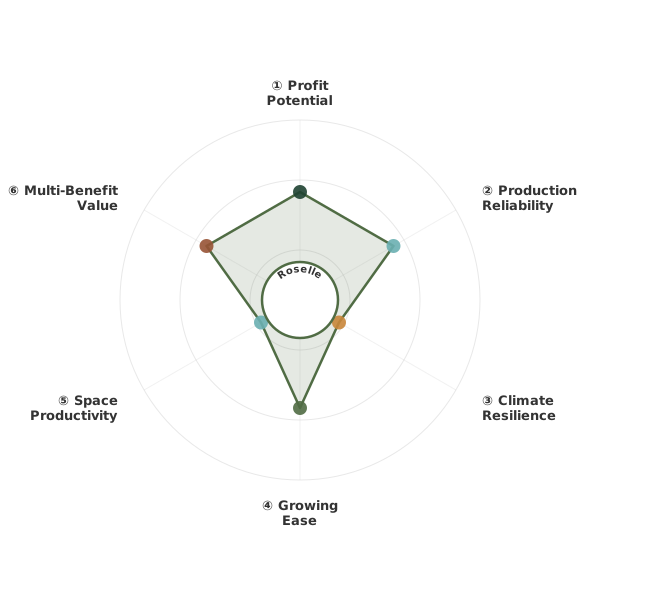
Regenerative Suitability Details

Comprehensive trait ratings for system integration assessment

Comparative ratings for this plant across key regenerative agriculture traits.

Trait Suitability Explanation
Season Extension Not Recommended Roselle thrives in warmth and is sensitive to frost, making it suitable for extending the growing season in tropical and subtropical regions with its rapid growth.
Space Efficiency Adequate This shrubby hibiscus efficiently utilizes space, providing a good yield of calyces with moderate spacing, contributing to overall system productivity.
Storage Longevity Ideally Suited Dried hibiscus calyces exhibit excellent long-term storage potential, preserving their vibrant color and flavor for extended periods when managed for dryness and protection.
Yield Reliability Adequate In suitable warm climates, Roselle reliably produces abundant calyces, benefiting from consistent heat and effective moisture retention strategies.
Establishment Ease Adequate Roselle germinates readily in warm soils, and its vigorous growth quickly establishes ground cover, naturally suppressing weeds and contributing to soil health.
Multi Benefit Value Adequate This plant offers edible calyces, attracts beneficial pollinators, and contributes significant biomass for compost and mulch, enhancing soil fertility and ecosystem function.
Climate Adaptability Not Recommended Roselle flourishes in tropical and subtropical conditions (zones 9-11), requiring a prolonged warm season and careful water management to optimize its growth.
Maintenance Intensity Adequate Roselle thrives with ample sun, warmth, and consistent soil fertility, minimizing the need for intervention by naturally outcompeting pests and diseases in a healthy ecosystem.
Disease Pest Resistance Adequate Roselle demonstrates moderate resistance, but maintaining good air circulation and promoting a balanced soil ecosystem through compost and mulch helps mitigate potential pest and disease issues.

Comparative System: Ratings compare plants within their economic category (e.g., cover crop nitrogen fixation compared to other cover crops, not to all plants). Individual farm conditions and management practices significantly influence actual performance.

8

Know the Debate

Roselle (*Hibiscus sabdariffa*) offers regenerative farmers a versatile specialty crop with significant economic potential for its calyces and fibe...

Roselle (*Hibiscus sabdariffa*) offers regenerative farmers a versatile specialty crop with significant economic potential for its calyces and fiber. While adaptable to warm temperate to tropical climates (USDA Zones 9-11, and specific niches in Zones 3-4, 10-14), outcomes are sensitive to local conditions. Production requires adequate moisture and fertility, with a moderate growing season of 90-150 days. Entry costs are relatively low, primarily involving seed and transitional fertility amendments, making it accessible for diversified income streams. The deep root system contributes to soil health, while its flowering habit supports pollinators.

How much calyx yield can I expect from Roselle?

Moderate Yields (1,000-3,000 lbs/acre)

Lower yields are reported in less optimal conditions, drier climates, or with less intensive management. These ranges are often observed in traditional or less managed systems.

Sources behind this view

Sources behind this view

Videos & Podcasts
  • Cover crops significantly improve soil health and water retention, crucial for drought management. Recommended drought-resistant crops include sorghum, amaranth, fonio, African rice, and millets. Alfalfa is noted as a resilient, high-value crop, with a cautious approach to newer engineered grains like Kernza.
    Thumbnail for 7 Regenerative Ways to Manage Drought
Research
  • Regenerative Agriculture: Integrating Soil Health, Carbon Management and Socio-ecological Outcomes (opens in new window)

    This study found: Regenerative agriculture is a farming approach that focuses on improving soil health, storing carbon, and building stronger communities. It uses practices like planting cover crops, reducing plowing, and growing a variety of crops. These methods help build better soil structure, boost beneficial soil microbes, and improve nutrient flow. By storing carbon in the soil, regenerative agriculture also helps stabilize the climate. Beyond environmental benefits, it aims to create more resilient rural communities by supporting farmers and fair resource use. This approach offers a sustainable path for food production that benefits both the environment and people.

High Yields (5,000-15,000 lbs/acre)

Higher yields are achievable with optimal management, including appropriate cultivars, consistent moisture, fertile soils, and timely harvest. These figures are often cited in commercial agriculture contexts and farmer success stories.

Sources behind this view

Sources behind this view

Videos & Podcasts
  • Multi-species cover crops (at least six types like cereals, legumes, broadleaves) are crucial for soil health, stimulating the soil food web and improving soil structure. Alternative methods like Korean Natural Farming create fermented plant juices from biomass for fertility and pest control.

    Thumbnail for BioEnergetics in Agriculture with Steve Diver
Research
  • Regenerative Agriculture: Integrating Soil Health, Carbon Management and Socio-ecological Outcomes (opens in new window)

    This study found: Regenerative agriculture is a farming approach that focuses on improving soil health, storing carbon, and building stronger communities. It uses practices like planting cover crops, reducing plowing, and growing a variety of crops. These methods help build better soil structure, boost beneficial soil microbes, and improve nutrient flow. By storing carbon in the soil, regenerative agriculture also helps stabilize the climate. Beyond environmental benefits, it aims to create more resilient rural communities by supporting farmers and fair resource use. This approach offers a sustainable path for food production that benefits both the environment and people.

From the Web
  • Rosmann Family Farms in Iowa uses diverse fields, crop-livestock integration, rotational grazing, and cover crops for resilience and pest control, advocating for more on-farm systems research to understand practice interactions.

Making Sense of the Differences

Roselle yield potential varies significantly based on cultivar choice, climate (rainfall and temperature), soil fertility, and management intensity. To achieve higher yields (5,000-15,000 lbs/acre), focus on selecting optimal varieties, ensuring consistent moisture, building soil organic matter through compost or cover crops, and timely harvest. Lower yields (1,000-3,000 lbs/acre) may occur in drier climates, with less fertile soils, or without specialized management.

Is Roselle fiber a significant economic product?

Secondary Economic Benefit

Roselle fiber is recognized as a valuable natural fiber, enhancing the plant's overall economic potential, particularly in regions with a tradition of fiber processing. Its contribution is typically considered alongside calyx production.

Sources behind this view

Sources behind this view

Videos & Podcasts
  • Increasing soil organic matter via cover crops sequesters significant water. Perennial grains like Kernza, developed by The Land Institute and University of Minnesota, offer resilience. Other recommended perennial oil crops include pennycress, winter camelina, perennial sunflower, and hybrid hazelnut.

    Thumbnail for Resilient AgroEcosystems | Lindsay Rebhan
Research
  • Regenerative Agriculture: Integrating Soil Health, Carbon Management and Socio-ecological Outcomes (opens in new window)

    This study found: Regenerative agriculture is a farming approach that focuses on improving soil health, storing carbon, and building stronger communities. It uses practices like planting cover crops, reducing plowing, and growing a variety of crops. These methods help build better soil structure, boost beneficial soil microbes, and improve nutrient flow. By storing carbon in the soil, regenerative agriculture also helps stabilize the climate. Beyond environmental benefits, it aims to create more resilient rural communities by supporting farmers and fair resource use. This approach offers a sustainable path for food production that benefits both the environment and people.

From the Web
  • Select warm-season cover crops based on soil type, climate, and goals. Prioritize diversity in mixes for benefits like organic matter increase, compaction relief, weed suppression, and grazing. Experimentation is key to finding the best fit.

Making Sense of the Differences

While Roselle's primary economic driver is calyx production, its fibrous stems offer a recognized secondary benefit. This fiber contributes to the plant's overall potential, especially in areas with established fiber markets. Its economic significance as a standalone product may be less pronounced than calyx sales but adds to the crop's value proposition in diversified systems.

9

Learn More

Why farmers use this plant and additional resources

Why Regenerative Farmers Use This Plant

Hibiscus sabdariffa, commonly known as Roselle, presents a compelling opportunity for regenerative farmers seeking high-value specialty cash crops and components for diversified farming systems. Its vibrant calyces are in demand for artisanal beverages, jams, and medicinal products, offering significant revenue potential per acre. Well-managed fields can yield between 5,000-15,000 lbs (2,268-6,804 kg) of calyces per acre, depending on variety and growing conditions.

With a relatively short growing season, typically maturing in 90-150 days from seed to harvest (or 60-75 days from transplant to harvest), Roselle allows for efficient land use and potential for succession planting in warmer regions. This rapid turnaround, coupled with its unique market appeal, positions Roselle as a valuable component in diversified farm income streams, catering to direct-to-consumer sales, farmers' markets, and specialty wholesale channels seeking unique, high-quality ingredients. The plant's fibrous stems also yield a valuable natural fiber, further enhancing its economic potential.

Integrating Roselle into regenerative systems offers multiple ecological benefits beyond direct economic return. While not a nitrogen fixer, its robust taproot system can reach depths of 1-5 feet (30-150 cm), aiding in soil aeration, breaking up compaction, and scavenging nutrients from deeper soil profiles, making them available to subsequent crops. Its dense foliage can contribute to significant above-ground biomass, which, when managed appropriately, enhances soil organic matter upon decomposition. This biomass also offers excellent ground cover, suppressing weeds and reducing soil erosion, especially on sloping land. Furthermore, its flowering period often coincides with periods when other crops may not be in bloom, providing a valuable nectar and pollen source for a diverse array of pollinators and beneficial insects, thereby supporting farm-level biodiversity and natural pest control mechanisms.

The ecosystem services provided by Roselle can be substantial. Studies on similar flowering crops indicate that abundant blooms can attract a high volume of pollinators, with individual plants potentially supporting hundreds of insect visits daily during peak flowering. This increased pollinator activity benefits not only the Roselle crop itself but also surrounding agricultural and natural ecosystems. The decomposition of Roselle residue after harvest contributes to soil health by returning organic matter and essential nutrients, improving soil structure, water infiltration, and nutrient retention capacity, thereby reducing reliance on external inputs over time. The plant contributes to carbon sequestration through its biomass production.

Regional success stories highlight Roselle's adaptability. In the humid subtropical regions of the Southern United States (USDA Zones 9-11), farmers have successfully cultivated Roselle for its calyces, often selling to local food processors and direct consumers. In parts of India and Southeast Asia, it is a traditional crop, integrated into diverse farming systems for its culinary and medicinal uses, and has been cultivated for centuries for its calyces and fiber. Australian farmers in warmer coastal areas and dryland regions (Zones 3-4, 10-14) have explored its potential as a niche cash crop, capitalizing on its drought tolerance once established and its appeal in a growing health food market. In the Caribbean and parts of South America, it is used to produce beverages and jams. In Brazil, it can be integrated into agroforestry systems, planted as an understory crop in young coffee or cacao plantations, where its shade tolerance and soil-improving qualities are advantageous. In Funchal, Portugal, its cultivation is also noted.

10

How to Integrate This Plant

Practical guidance for regenerative systems

Establishing Hibiscus sabdariffa requires careful attention to its specific needs for optimal yield and quality.

Establishment:

  • Seeding: Direct seeding is common. Seeding rates typically range from 5-10 lbs/acre (5.6-11.2 kg/ha) when drilled in rows, or 5-15 lbs/acre (5.6-16.8 kg/ha) when broadcast. For denser plantings or specific uses like fiber production, rates can increase to 15-25 lbs/acre (16.8-28 kg/ha). Seeds should be planted at a depth of 0.25-0.5 inches (0.6-1.3 cm) to ensure good soil contact and moisture access.
  • Transplanting: Transplants, typically started indoors 4-6 weeks before the last frost, offer a head start and can ensure a longer harvest period, especially in regions with shorter growing seasons.
  • Planting Time: In the Northern Hemisphere, planting typically occurs after the last frost, from April through June, with warmer regions like Florida and California allowing for earlier starts. In the Southern Hemisphere, this translates to planting from September through November.
  • Spacing: Spacing between plants is crucial for calyx development and airflow, ranging from 18-36 inches (45-90 cm) apart, with row widths of 3-4 feet (0.9-1.2 m). For denser plantings, rows can be set 2-3 feet (60-90 cm) apart, with plants spaced 1-2 feet (30-60 cm) within the row.

Management Practices:

  • Moisture: Adequate moisture is essential, particularly during establishment and flowering. Approximately 1-2 inches (2.5-5 cm) of water per week is recommended, either from rainfall or irrigation. While moderately drought-tolerant once established, consistent moisture maximizes calyx development and yield.
  • Fertility: Biological fertility approaches are paramount. Incorporating well-rotted compost or aged manure into the soil before planting is highly beneficial. As Roselle can be a moderate to heavy feeder, particularly of phosphorus and potassium, its nutrient needs can be met through a combination of compost, cover crop residues from preceding crops, and, if necessary, transitional applications of balanced organic fertilizers or by utilizing residual fertility. Its deep roots can access nutrients from lower soil profiles.
  • Plant Height: Plants typically reach a height of 4-7 feet (1.2-2.1 m) at maturity, depending on the variety and growing conditions.
  • Pest and Disease Management: Prioritize cultural practices such as crop rotation, selecting disease-resistant varieties, maintaining plant health, and encouraging beneficial insect populations. Companion planting with basil or marigolds can help deter certain pests. Proper spacing for air circulation is also key.

Integration and Rotation:

  • Production Cycle: From seed to first harvest, the crop typically takes 90-120 days. For calyx production, it requires 100-150 days from seed to harvest. Days from transplant to harvest can be as short as 60-75 days.
  • Succession Planting: In regions with long frost-free periods, succession planting every 2-3 weeks from late April through mid-June (Northern Hemisphere) or September through November (Southern Hemisphere) can provide a continuous harvest window from August through October or February through April, respectively.
  • Crop Residue Management: After harvesting the calyces, the remaining plant residue can be incorporated into the soil to enrich organic matter. This should ideally be done within two weeks of final harvest.
  • Cover Cropping: Following Roselle incorporation, planting a fast-growing cover crop such as buckwheat or millet can help scavenge residual nutrients and prevent erosion. In cooler climates, a winter cover crop mix, such as cereal rye and hairy vetch, can be planted to protect soil structure, scavenge remaining nutrients, and further enhance soil health and organic matter before the next cash crop cycle.
  • Crop Rotation: A 3-4 year crop rotation interval with unrelated crops is recommended to prevent the buildup of soil-borne diseases and pests and ensure the long-term sustainability of its production without reliance on synthetic inputs.

Regional Adaptations:

  • Southeastern United States: Planted in beds after early spring crops like peas or radishes, utilizing warm summer months for rapid growth and harvesting calyces in late summer and fall. Can be intercropped with corn or okra.
  • Australian Dryland Systems: Established with autumn rains, grown through the warmer months, and harvested before winter. Requires minimal irrigation once established.
  • Tropical Regions of Brazil: Can be intercropped or planted as a border crop, providing shade for young plants and contributing to farm biodiversity. Integrated into agroforestry systems.
  • India: Traditional crop integrated into diverse farming systems, often grown in rotation with rice or pulses.
  • Canada: Can be grown with protection or as an annual in Zones 7-10, with potential for longer seasons in Zone 10-12.
  • Portugal (Funchal): Suitable for cultivation in specific microclimates.
View Full Document (Printable single-page version)