
New to Us and Worth Highlighting
Videos and Podcasts
 (opens in new window)
Himachal Pradesh's 'Kheti Khushal Ki Sanyojana' promotes natural farming to boost farmer income, reduce pesticide use, and improve health, aligning with SDGs. The project involves over 116,000 farmers, innovative certification, and market linkages.
(opens in new window)
Sikkim became the world's first 100% organic state through political commitment, removing chemical fertilizer subsidies, and building infrastructure. The focus is now on processing and marketing to add value and create direct producer-consumer links.
 (opens in new window)
Kenya's livestock sector is vital for livelihoods and economy. Strategies include aggregating dairy farmers into cooperatives, investing in cooling facilities, and using index-based insurance to boost productivity and resilience, with a focus on including women and youth.
From The Web
 (opens in new window)
The Biochar Policy Project (NCAT) proposes a strategy to scale biochar production by filling knowledge gaps, lowering investment barriers, and securing biomass feedstock. It emphasizes biochar's high carbon sequestration potential for climate mitigation, advocating for federal grants and forest material utilization, with bipartisan congressional support.
 (opens in new window)
MetaGrow F is highlighted for reestablishing beneficial fungal communities in soils, improving nutrient cycling, residue breakdown, and soil structure in regenerative systems. It's applied in diverse ways across crops and is crucial for transitioning to biological farming by shifting soil biology towards fungal dominance.
 (opens in new window)
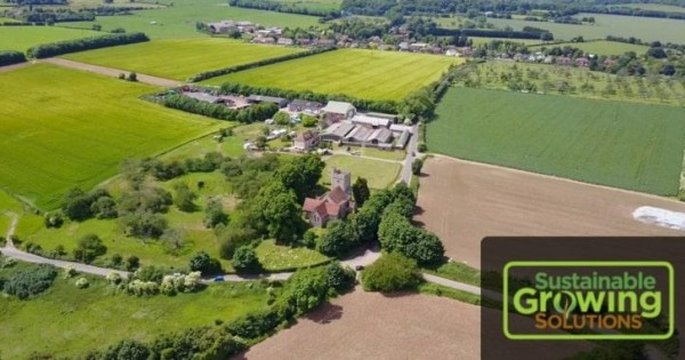
A large-scale research project across 80+ farms from Kansas to Saskatchewan is studying the impact of converting to regenerative cash grain production, focusing on soil and insect biodiversity, pollination, and pest predation using advanced bioinventories and AI.
Community Based
permies.com
A farm near Missoula, Montana, generated $30k annually by hosting campers on Hipcamp, offering rustic tent and RV sites with amenities like composting toilets and selling farm products, facilitated by Hipcamp's platform and insurance.
permies.com
The 'Trench Method,' inspired by Native American techniques, creates deep trenches in sandy soils to access stored water, enabling successful crop growth with minimal watering.
 (opens in new window)
permies.com
Details the practical challenges and learning process of establishing a diverse permaculture garden in Thailand, focusing on planting exotic fruit tree seeds, managing pests naturally, and adapting to the tropical climate.
Intriguing Research
A long-term study at the 180-year-old Broadbalk Experiment in the UK, using advanced tracking methods, found that organic fertilizers (like manure or compost) build soil carbon much more effectively than synthetic fertilizers over time. While both can maintain crop yields, organic fertilizers increased total soil organic matter by 160% compared to no fertilizer, whereas synthetic fertilizers only achieved a 26% increase. This is because organic inputs provide a continuous supply of food for soil microbes, allowing them to build both easily decomposable (particulate organic carbon) and stable (mineral-associated organic carbon) forms of soil carbon. Synthetic fertilizers, however, can lead microbes to break down existing soil carbon faster. A global review of experiments confirmed that organic fertilization leads to significantly more soil carbon over decades. The findings suggest that managing soil microbes and the breakdown of dead organic matter is key to building lasting soil carbon.
A review of research from the Western Canadian Prairies shows that regenerative farming practices, such as no-till, diverse crop rotations, cover crops, and organic matter additions, significantly boost soil life. These methods can increase soil microbes by up to 86%, beneficial root fungi by up to 60%, and overall microbial diversity by about 50%. This leads to better soil structure, water retention, and nutrient availability, meaning crops can use nutrients more effectively. Farmers can expect more stable crop yields, with gains of 10-147% in some no-till systems and 14-38% with diverse rotations. These practices also reduce the need for synthetic fertilizers by up to 73% and herbicides by up to 42%. Soil microbes are crucial for linking climate, plants, and soil health, making farms more resilient in challenging climates.
This review analyzed over 50 studies from the last decade on using Brassica cover crops (like mustard, radish, and canola) in US farming to naturally suppress pests and diseases. These plants release natural compounds called isothiocyanates when they break down, which can act like a natural fumigant. The effects on soil health are varied: some, like mustard and turnip, can help reduce soil compaction and increase organic matter, while others, like canola, might use up soil water or reduce beneficial microbes. The studies showed that these cover crops were very effective at controlling plant diseases (in 87.5% of studies) and plant-parasitic nematodes (in 60% of studies). Mustard was particularly good at tackling diseases, and daikon radish was effective against common nematodes affecting soybeans. However, some Brassica plants can also host certain nematodes, making outcomes complex. Weed control results were inconsistent. More research is needed on long-term soil changes, especially in dry or salty areas, and on how to best integrate these crops for multiple benefits.